

Breast Reconstruction in Blue Bell, PA
Breast Reconstruction Surgery
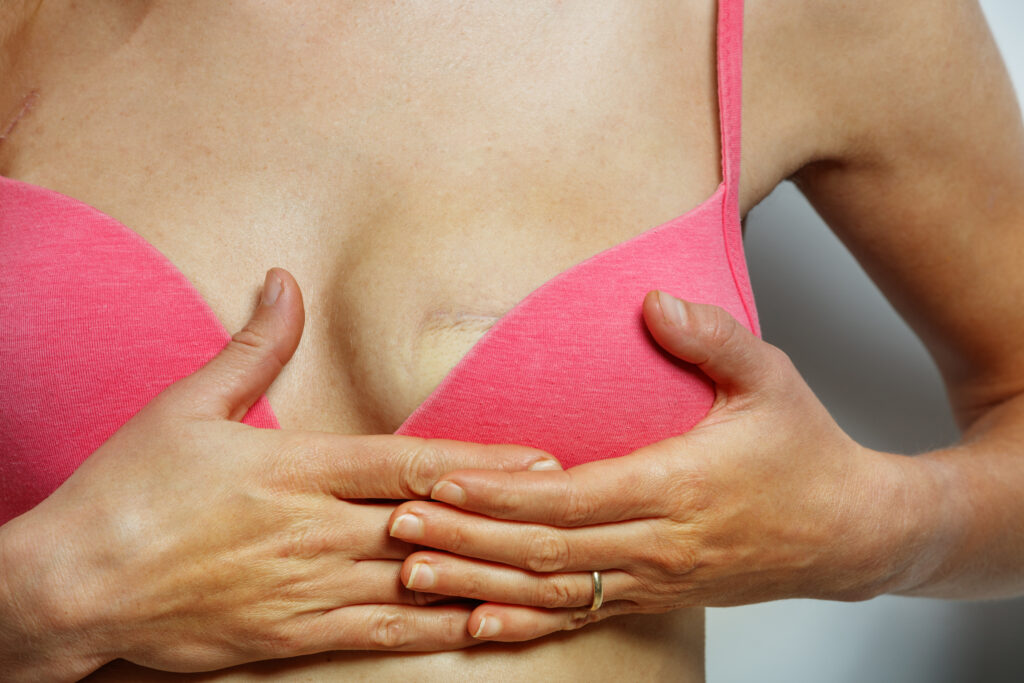
Breast reconstruction restores breast form after mastectomy or lumpectomy using implant-based techniques, autologous tissue flaps, or a hybrid approach. The goal is to recreate a natural breast mound while supporting long-term symmetry and comfort.
A Reconstructive Pathway
Who Reconstruction Is For
Reconstruction may be considered after cancer treatment, prophylactic mastectomy (risk-reduction), trauma, or congenital asymmetry. Planning is coordinated with your breast surgeon and oncology team to align timing, incision design, and adjuvant therapy.
Immediate
Performed during the same operation as mastectomy; preserves skin envelope and improves contour continuity.
Delayed
Completed months or years later, often after radiation; allows tissues to stabilize first.
Revision
Refinement surgery for symmetry, scar optimization, implant exchange, or flap shaping.
Surgical Goals
Rebuilding the Breast Mound
Reconstruction focuses on restoring breast volume and contour using tissue expansion, prosthetic implants, or autologous tissue transfer. The chest wall, inframammary fold (IMF), and skin quality guide technique selection.
When radiation is planned or already completed, we account for fibrosis, reduced dermal elasticity, and vascular changes.
Mastectomy
Removal of breast tissue; may be skin-sparing or nipple-sparing.
Tissue Expander
Temporary implant that stretches skin to prepare for a final implant.
Autologous Flap
Reconstruction using your own tissue with microvascular anastomosis.
Capsular Contracture
Excess scar capsule tightening around an implant, causing firmness or distortion.
Microvascular
Precise vessel connection under magnification to perfuse transferred tissue.
IMF Recreation
Re-establishing fold position for natural lower-pole shape.
Technique Options
Breast Reconstruction Options
Your plan depends on oncologic timing, anatomy, and personal goals. Below is a high-level overview of common pathways.
Implant-Based Reconstruction
Typically a two-stage approach using a tissue expander followed by a permanent implant. In selected cases, direct-to-implant reconstruction is possible. We consider base width, skin viability, and radiation history to limit complications like capsular contracture or implant malposition.
DIEP / TRAM Flap (Abdominal Tissue)
Uses lower abdominal skin and fat to recreate the breast mound. DIEP flaps preserve rectus muscle, while TRAM flaps may include muscle. Requires microvascular anastomosis to chest vessels for durable perfusion.
Latissimus Dorsi Flap
Transfers tissue from the upper back to the chest. Commonly paired with an implant for volume. Useful after radiation or when abdominal flaps aren’t ideal.
Fat Grafting (Lipofilling)
Purified autologous fat is injected to improve contour, camouflage implant edges, or refine flap shape. Often used as a staged enhancement.
Nipple-Areola Reconstruction
Performed after mound healing using local flaps and/or 3D medical tattooing. Restores the nipple-areola complex (NAC) position and aesthetic balance.
Related services: breast reduction, breast lift, breast augmentation.
Recovery
Recovery Timeline
Healing varies by technique. Flap procedures require longer recovery than implant exchange. We give a personalized plan based on surgical staging and oncology coordination.
Stage 1
Hospital stay (often 1–3 days). Drain care, ambulation, and monitoring for seroma, hematoma, or flap perfusion compromise.
Stage 2
Weeks 2–6: swelling decreases, scar maturation begins, gentle range-of-motion resumes. Expanders may be gradually filled in-office.
Stage 3
Months 3–12: refinement procedures if desired (fat grafting, symmetry lift/reduction, NAC reconstruction). Final contour stabilizes.
Safety First
Risks & Considerations
Your health history and cancer treatment plan matter. We review all risks during consent.
Infection or delayed healing: increased risk after radiation or diabetes.
Flap compromise: vascular thrombosis may require urgent revision.
Implant complications: capsular contracture, rupture, or malposition.
Asymmetry / revision needs: staged refinements are common and expected.
Questions, Answered
Breast Reconstruction FAQ
Clear answers to common questions about timing, techniques, and expectations.
Can reconstruction be done at the same time as mastectomy?
Yes. Immediate reconstruction is often possible and can help preserve skin and IMF definition. Your oncology plan and overall health determine eligibility.
How does radiation affect reconstruction?
Radiation may increase fibrosis, reduce elasticity, and raise implant-complication risk. Autologous flaps are often more resilient in radiated tissues.
Will reconstruction match my natural breast?
The goal is natural symmetry. Many patients choose a balancing procedure on the opposite side (lift, reduction, or augmentation) to optimize matching.
How many stages are typical?
Implant pathways often involve 2 stages; flap pathways can be 1–2 stages plus optional refinement.
Schedule Your Consultation
Meet with Dr. Herman to review reconstruction timing and options tailored to your cancer pathway. Our office is located in Blue Bell, PA.
Reconstructive Expertise
Why Choose Dr. Herman
Dr. Herman combines oncologic coordination with meticulous reconstructive technique— prioritizing soft-tissue viability, scar planning, and durable symmetry.
- Advanced training in aesthetic & reconstructive breast surgery
- Microvascular and implant reconstruction experience
- Collaborative planning with oncology teams
Learn more on the surgeon bio and explore related breast services: breast lift, breast augmentation.
Patient Testimonials
Real stories. Real results.
★★★★★
4.8 / 5.0 Overall Rating
Across 1,000+ verified patient experiences.
★★★★★
“I couldn’t be more pleased with the exceptional care I receive at this office. A+ in every way.”
— Verified Patient Review (Jul 1, 2022)
★★★★★
“Dr. Herman is an amazing practitioner. His ability exceeds others. He’s also personable — his people skills match his genius as a plastic surgeon.”
— Verified Patient Review (May 21, 2024)
★★★★★
“Dr. Herman is absolutely the best! He is knowledgeable and professional. He has changed my life forever and made my dream come true. I am very, very pleased with the results! Thank you Dr. H!!!”
— Nicola G. (Plastic Surgery Near You)
★★★★★
“Appointment was on time, all my questions were answered. Staff and doctor were very knowledgeable and pleasant. Got fast results — I’m glad I chose this office.”
— Verified Patient Review (Apr 29, 2025)
★★★★★
“I love the professionalism of the office and Dr. Herman is awesome. I would recommend him to anybody.”
— Verified Patient Review (Apr 10, 2025)
★★★★★
“Dr. Herman is an excellent doctor. His staff is courteous, polite, and knowledgeable. He explains everything thoroughly so you understand, and always answers questions.”
— Verified Patient Review (Jul 2, 2024)
★★★★★
“This man is not only an excellent surgeon — he is an artist. He changed my life and gave me confidence I never knew I had. His work is stellar, and I will continue to go to him for future procedures. His support staff is amazing and professional.”
— Stefanie Franklyn (Plastic Surgery Near You)
★★★★★
“I have gone to Dr. Herman’s office for years. Everyone there is more like family, and they treat you with the utmost care. I would send everyone there to them.”